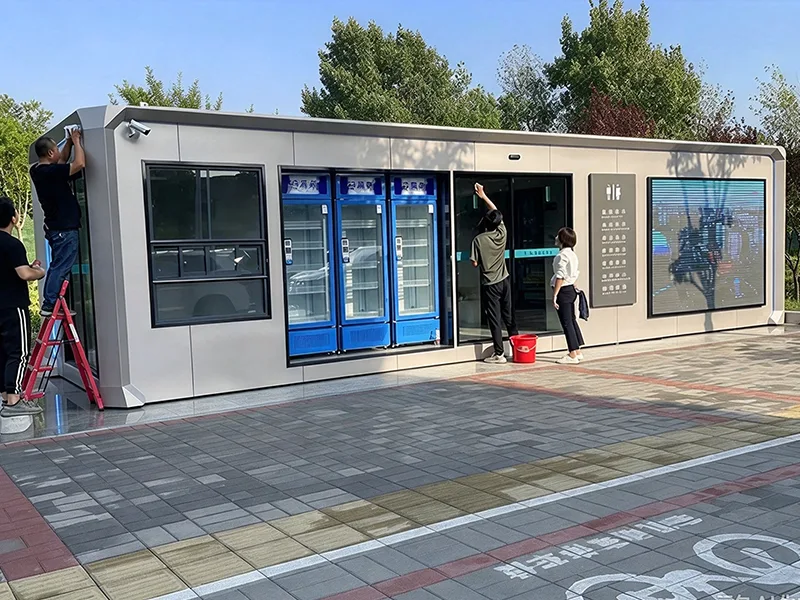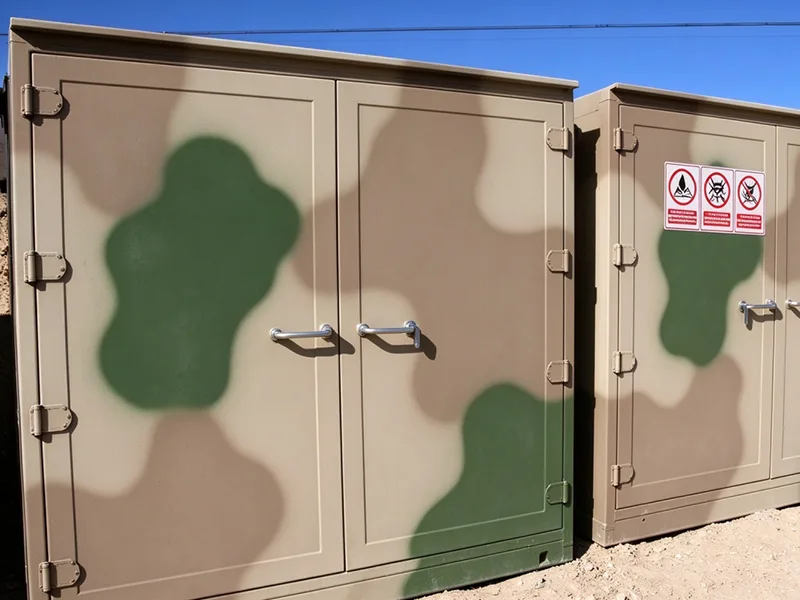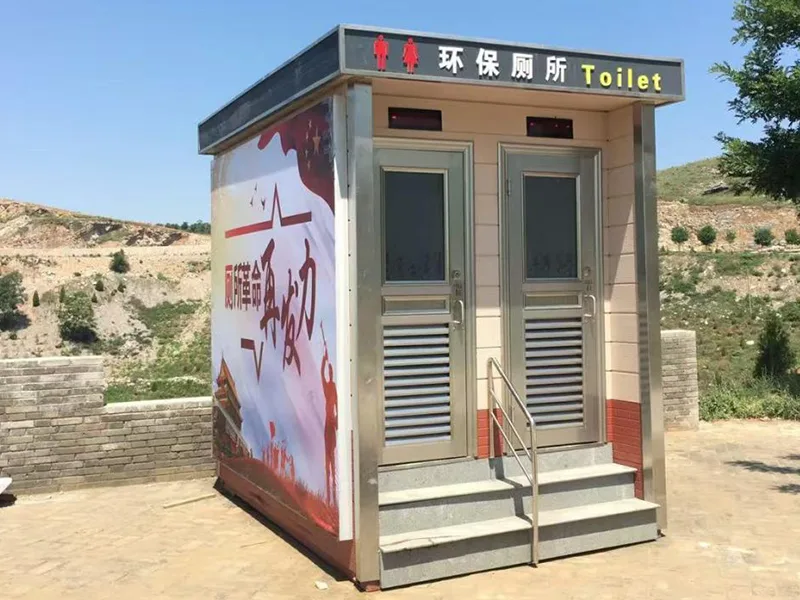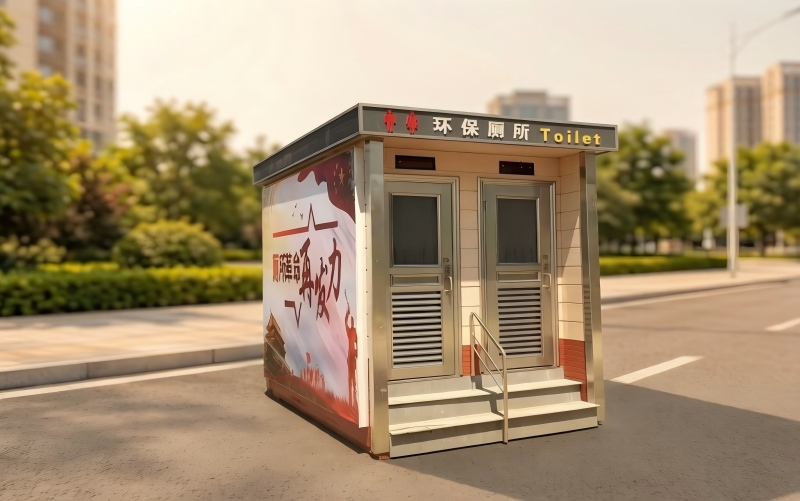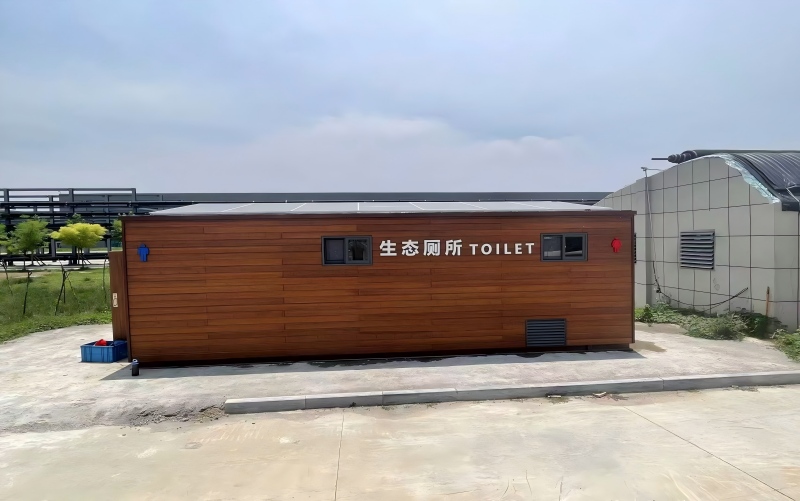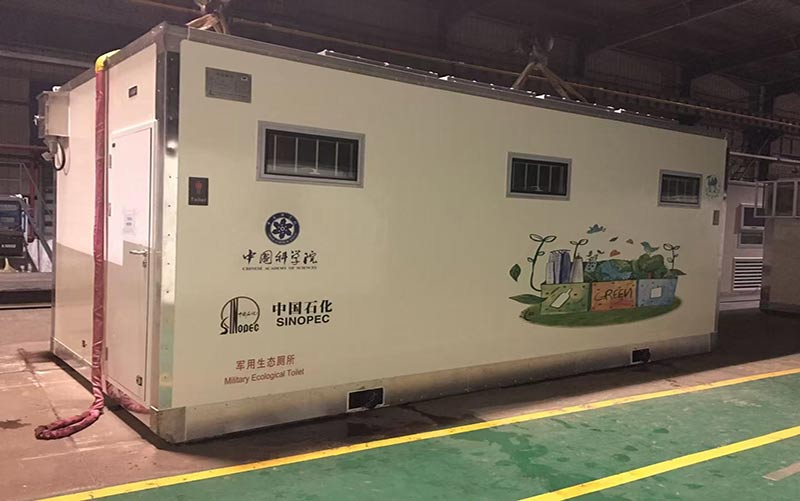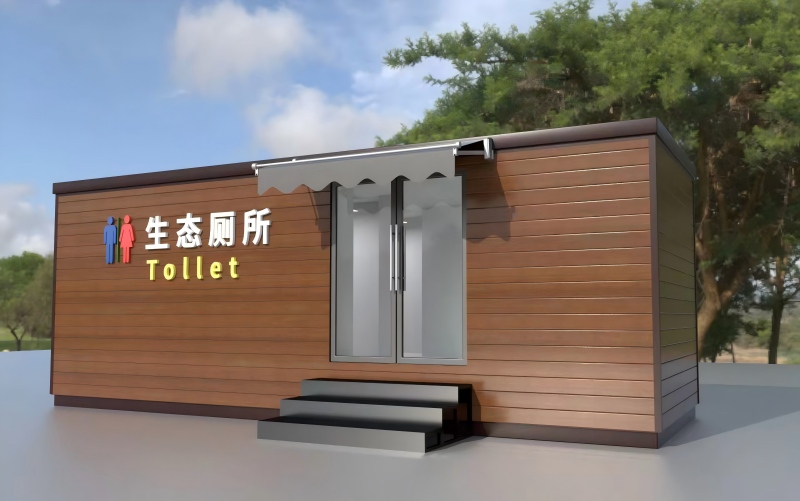
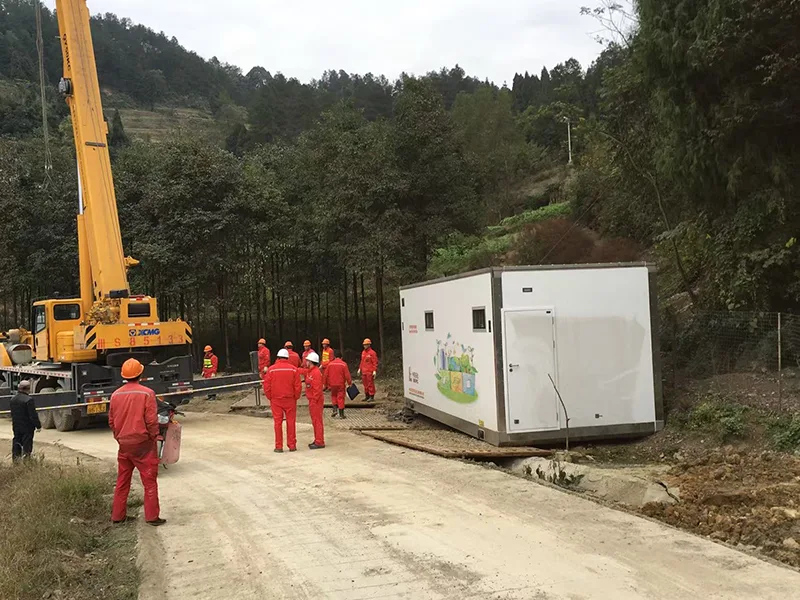
Jingjiu Mobile Eco Toilet for Field Engineering Camps is a factory-prefabricated toilet and wastewater treatment system designed for temporary construction camps and outdoor engineering projects without municipal sewer connections.
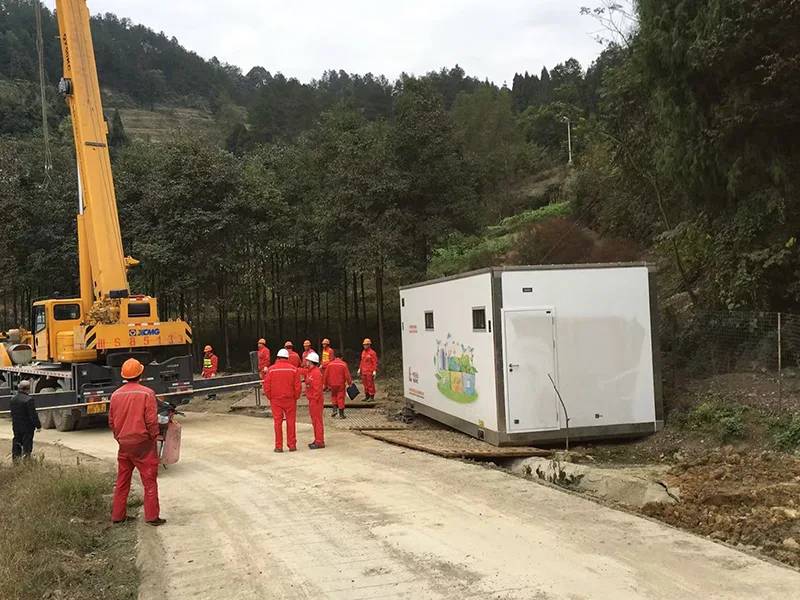
The toilet facilities, wastewater treatment equipment and water reuse system are integrated into a containerized structure. The complete unit can be transported to the project site and positioned by crane. After connecting power and adding the required initial water, the system can be put into operation without excavation, sewer construction or a permanent foundation.
The system uses composite microbial degradation, multi-stage biological treatment, decolorization, deodorization, disinfection and RO membrane filtration to treat toilet wastewater inside the unit. Treated water is returned to the flushing system, with a stated water reuse rate of ≥95% and zero external discharge under the specified operating configuration.
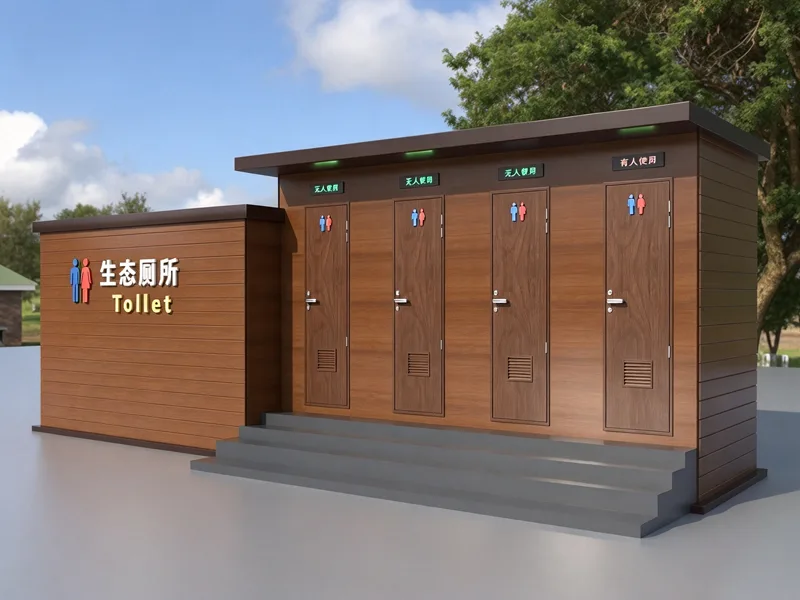
The equipment can be configured with single, double or multiple toilet stalls. A single-stall configuration supports approximately 60–80 uses per day, while multi-stall configurations can serve approximately 300–1,500 uses per day.
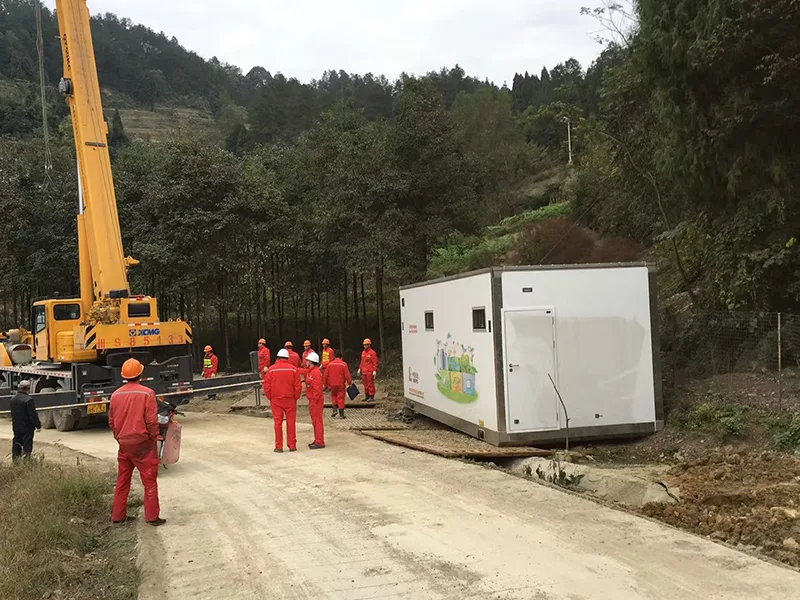
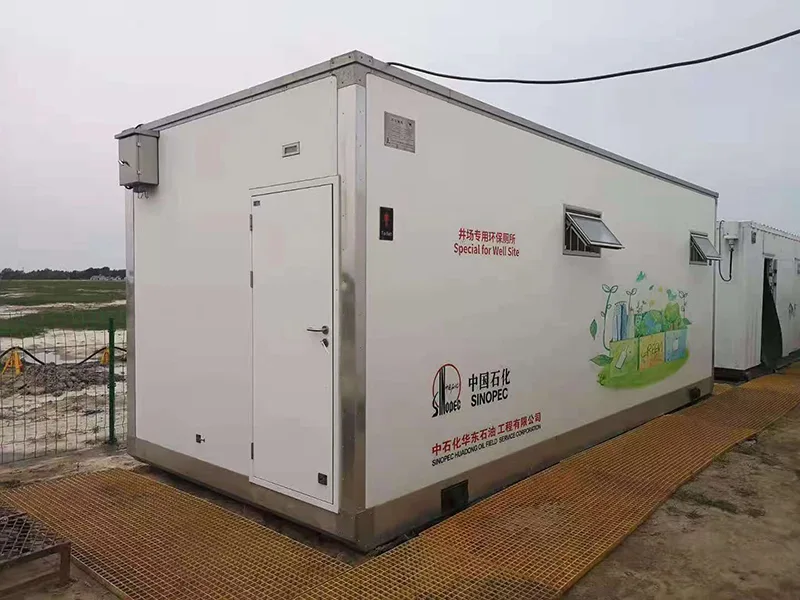
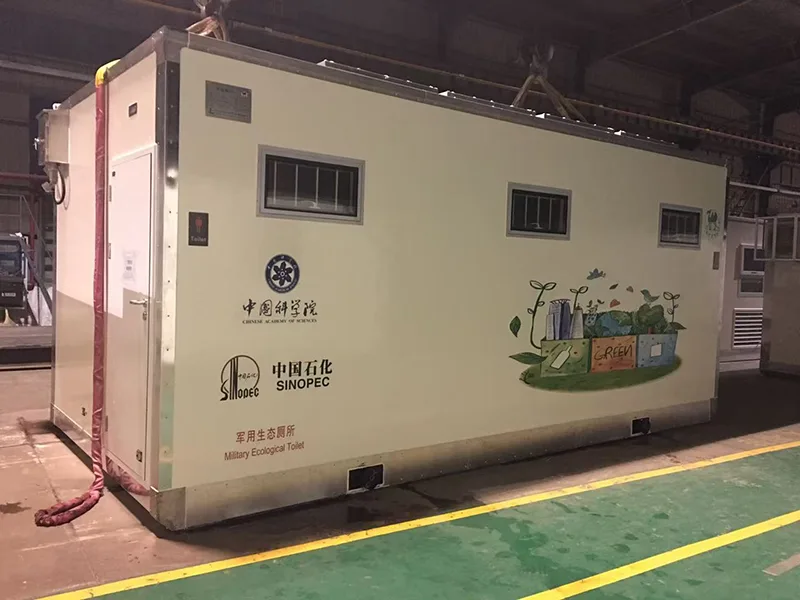
The engineering camp eco toilet uses a containerized integrated structure. The main toilet facilities and wastewater treatment equipment are prefabricated and assembled before delivery, reducing installation work at the project site.
Available configurations include:
Single-stall configuration
Double-stall configuration
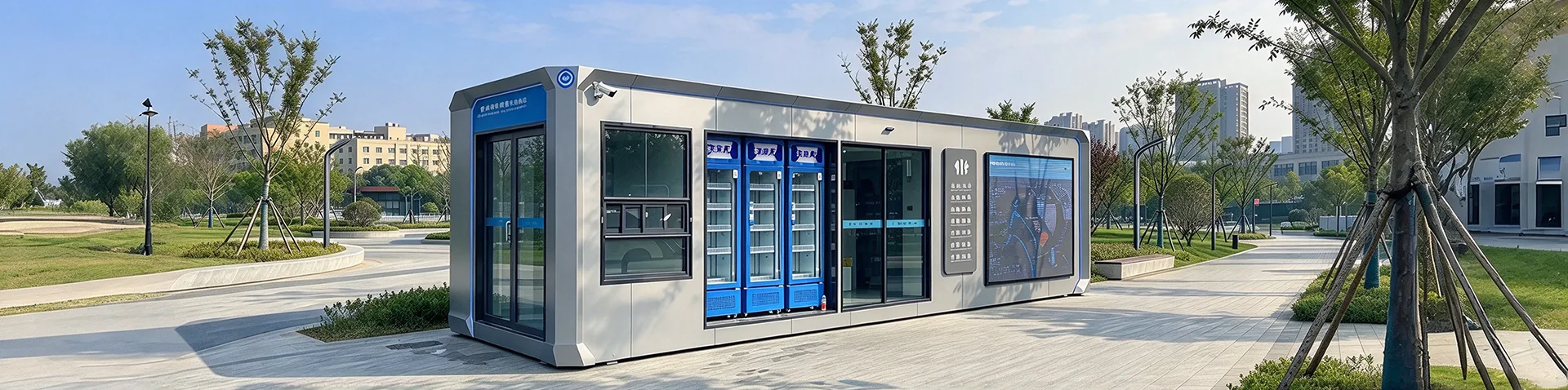
Multi-stall configuration
Tool room
Equipment treatment room
Jingjiu can provide different equipment configurations according to the project requirements. The PS01 series uses an integrated wastewater treatment system, while the K17 Urban Star Station uses a microbial circulation flushing system.
The containerized structure allows the complete unit to be transported and lifted as one piece. When the engineering camp moves to another location, the toilet can be crane-lifted and transported to the next site.
Toilet wastewater is treated inside the integrated system instead of being collected in an external septic tank.
The treatment process is:
Toilet → Primary Crushing and Equalization Tank → Variable-Frequency Sewage Pump → Anaerobic Biological Tank → Anoxic Tank → Aerobic Biological Tank → Decolorization, Deodorization and Disinfection Tank → RO Membrane Filtration → Clean-Water Tank → Toilet Flushing
Wastewater first enters the primary crushing and equalization tank and is then pumped through the biological treatment stages.
Composite microbial cultures degrade organic matter in the wastewater. The anaerobic, anoxic and aerobic biological stages provide further treatment before the wastewater enters the decolorization, deodorization and disinfection stage.
The treated water then passes through the RO membrane filtration system. After filtration, the water is stored in the clean-water tank and returned to the toilet flushing system.
The stated treatment cycle is 48–72 hours, with a filtration precision of 0.01 μm and a water reuse rate of ≥95%.
The system uses composite microbial cultures to degrade organic matter from toilet wastewater inside the treatment equipment.
The microbial treatment process works together with anaerobic, anoxic and aerobic biological treatment. Wastewater is continuously processed inside the integrated system without relying on an external septic tank.
According to the supplied technical data, the organic degradation rate can reach 99%, and the bacterial activity cycle is more than 6 months under the specified operating conditions.
After biological treatment and decolorization, deodorization and disinfection, the wastewater enters the RO membrane filtration stage.
The filtration precision is 0.01 μm. Filtered water is collected in the clean-water tank and returned to the toilet flushing system.
The system is designed for ≥95% water reuse, reducing the amount of fresh water required during operation. Under the specified operating configuration, treated water remains within the circulation system without external discharge.
The wastewater treatment system includes remote monitoring and control functions.
The system can monitor:
Water quality
Ammonia
Hydrogen sulfide
Temperature
Humidity
Water level
Pump operating status
Operating conditions can be adjusted according to changes in site traffic. Pump operation and water level can be controlled remotely through a computer or mobile device, while water quality can be monitored in real time.
This allows the operating condition of the treatment system to be checked remotely and reduces the need for continuous on-site operation.
The complete unit is prefabricated before delivery and can be installed without permanent civil construction.
The basic site requirements are:
Level ground
Electrical power
Approximately 10 m³ of initial water
The standard deployment time is approximately 2 hours.
No excavation, septic tank construction or permanent sewer connection is required. The complete containerized unit can be positioned by crane and connected to power for operation.
When the engineering camp moves to another construction area, the toilet can be lifted and transported with the camp. The same equipment can therefore be reused at another project location instead of being left at the original site.
The mobile eco toilet is designed for outdoor engineering camps and temporary construction sites.
|
Item |
Data |
|
Operating temperature |
-30 to 60°C |
|
Protection rating |
IP65 |
|
Design life |
10+ years |
|
Operation |
24 h |
|
Structure |
Containerized |
|
Installation |
Crane lifting |
|
Civil works |
None |
|
Initial water |
Approx. 10 m³ |
|
Deployment time |
Approx. 2 h |
The container uses a double-layer insulated structure and protective treatment for outdoor operation. The equipment can be used in different engineering environments within the specified temperature and operating conditions.
|
Item |
Data |
|
Daily capacity per stall |
60–80 uses/day |
|
Multi-stall capacity |
300–1,500 uses/day |
|
Rated power |
1–3 kW |
|
Daily power consumption |
20–50 kWh |
|
Annual O&M cost |
¥15,000–20,000 |
|
Traditional annual pumping cost |
¥120,000–150,000 |
|
Stated O&M saving |
80%+ |
|
Deployment |
Approx. 2 h |
|
Civil works |
None |
|
Operation |
24 h |
|
Water reuse |
≥95% |
|
Treatment cycle |
48–72 h |
|
Filtration precision |
0.01 μm |
|
Operating temperature |
-30 to 60°C |
|
Protection rating |
IP65 |
|
Design life |
10+ years |
Actual capacity and operating costs may vary according to the number of users, daily usage frequency, toilet configuration and site conditions.
Jingjiu mobile eco toilets can be used for temporary or relocatable engineering camps in the following projects.
The unit can be installed at temporary construction camps and worker accommodation areas and moved as construction progresses to different sections.
The system can be used at temporary water conservancy project camps and outdoor work areas where municipal sewer infrastructure is unavailable.
The containerized structure can be moved with temporary mining camps and outdoor work areas as the project location changes.
For wind farms and photovoltaic projects located away from municipal sewer networks, the unit provides an independent toilet and wastewater treatment facility.
Pipeline construction often involves long project routes and temporary camps. The crane-lifted unit can be transferred between work sections as construction progresses.
The mobile eco toilet can be used at temporary construction sites and large engineering camps without constructing a permanent sewer connection.
The unit can be deployed at field training areas and temporary camps where a permanent toilet and sewer system are not available.
The containerized structure and approximately two-hour deployment time allow the unit to be used for temporary accommodation and emergency deployment facilities.
Jingjiu mobile eco toilet systems have been supplied for projects involving PetroChina, Sinopec, military units and aerospace applications.
According to the supplied project records, more than 50 projects have operated for over three years. The systems have also been used for aerospace launch support under conditions including 45°C temperature, 90% humidity and a three-fold load surge.
More than 1,000 units have been supplied to construction sites, rural towns, scenic areas, gas stations, military units and other project locations.
Suzhou Jingjiu Environmental Protection Technology Co., Ltd. was established in 2018. The company has 50+ technical patents, 10+ test reports, 5+ science and technology progress awards and 100+ engineering cases.
The technical team has received guidance from experts including Prof. Liu Hongbo and cooperates with multiple research institutions.
Jingjiu operates under the following management systems:
ISO 9001 Quality Management System
ISO 14001 Environmental Management System
ISO 45001 Occupational Health and Safety Management System
The wastewater treatment system has undergone third-party testing according to GB 18918-2002 Class 1A.
Relevant test reports, technical documents and product information can be provided according to the specific product configuration and project requirements.
Yes. The unit is designed for independent operation without a municipal sewer connection or external septic tank.
No regular fecal pumping is required under normal operation. Toilet wastewater is treated inside the integrated system and treated water is reused for flushing.
The standard deployment time is approximately 2 hours. The site needs level ground, electrical power and approximately 10 m³ of initial water.
No. The containerized unit does not require excavation or a permanent civil foundation and can be positioned by crane.
Yes. The complete unit can be lifted and transported by crane to another engineering camp and reused at a new location.
A single-stall configuration supports approximately 60–80 uses per day. Multi-stall configurations can serve approximately 300–1,500 uses per day, depending on the configuration.
The specified operating temperature range is -30 to 60°C, with IP65 protection. The container uses double-layer insulation and outdoor protective treatment.
The stated water reuse rate is ≥95%. Treated water is returned to the toilet flushing system.
The supplied operating data gives an annual O&M cost of approximately ¥15,000–20,000, compared with approximately ¥120,000–150,000 for traditional annual pumping. The stated saving is 80%+, while actual operating costs depend on site conditions and usage.
Address
International Business Department Office: No. 2, Lane 28, Baizhang East Road, Yinzhou District, Ningbo City, China
Tel
If you have any enquiry about quotation or cooperation, please feel free to email us or use the following inquiry form.Our sales representative will contact you within 24 hours. Thank you for your interest in our products.